


Newsletter of the main news 02.11/08.11
All newsDate
08 Nov 2026

- Telegram


1. International Sanctions Policy
Seven countries have announced a boycott of matches against Russia at the 2027 Ice Hockey World Championship. The move reflects continued political pressure on Russian sport at the international level.
Switzerland has aligned itself with the EU’s 21st package of sanctions against Russia and Belarus. The country is bringing its restrictive measures into line with the latest EU sanctions decisions.
The European Archery Federation has lifted restrictions on Russian athletes, with the change set to take effect in 2027. The decision marks a shift in the federation’s approach to Russian participation in international competitions.
The EU Court has dismissed Russia’s claim seeking to overturn the ban on Russian ships entering European ports. The ruling leaves the relevant EU restrictions in place.
Hungary plans to phase out Russian gas by autumn 2027. The move is part of the country’s efforts to reduce its energy dependence on Russia.
The Baltic states and Poland have called on EU countries to terminate their investment protection agreements with Russia. The initiative seeks to review the legal framework governing investment relations with Moscow.
Germany’s Alternative for Germany (AfD) party has unveiled policy papers outlining its positions on key political issues. The materials outline the party’s positions on key political issues. In particular, on German-Russian relations, the AfD reiterates its familiar demands: resuming the operation of the Nord Stream pipelines in the Baltic Sea, lifting economic sanctions against Russia, and ending military aid to Ukraine.
Poland has added the company WREX to its sanctions list targeting Russia. The move expands the list of entities subject to Polish restrictive measures.
Belarus has been barred from the 2027 senior and junior Ice Hockey World Championships. The decision continues the restrictions on Belarusian hockey at the international level.
A Russian passport is causing problems for its holders even in countries friendly to the Russian Federation. The report highlights the difficulties Russians face abroad amid Russia’s international isolation.
2. Sanctions Violations and Circumvention
The EU is stepping up its efforts to combat the circumvention of sanctions against Russia. The measures focus on identifying and disrupting schemes used to evade the restrictions.
The United States has blocked a major cryptocurrency exchange from accessing the financial system over the circumvention of sanctions against Russia. The case highlights the extension of sanctions enforcement to digital asset transactions.
Russia has authorised the continued non-return of aircraft to foreign companies. The measure concerns aircraft retained in Russia following restrictions on the aviation sector.
A South Korean national has been arrested on suspicion of illegally exporting cars to Russia. The case concerns a possible breach of restrictions on exports to the Russian market.
The EU is importing Russian ammonia despite the supplier’s links to Russia’s defence industry. The report raises questions about continued trade with companies connected to Russia’s military-industrial complex.
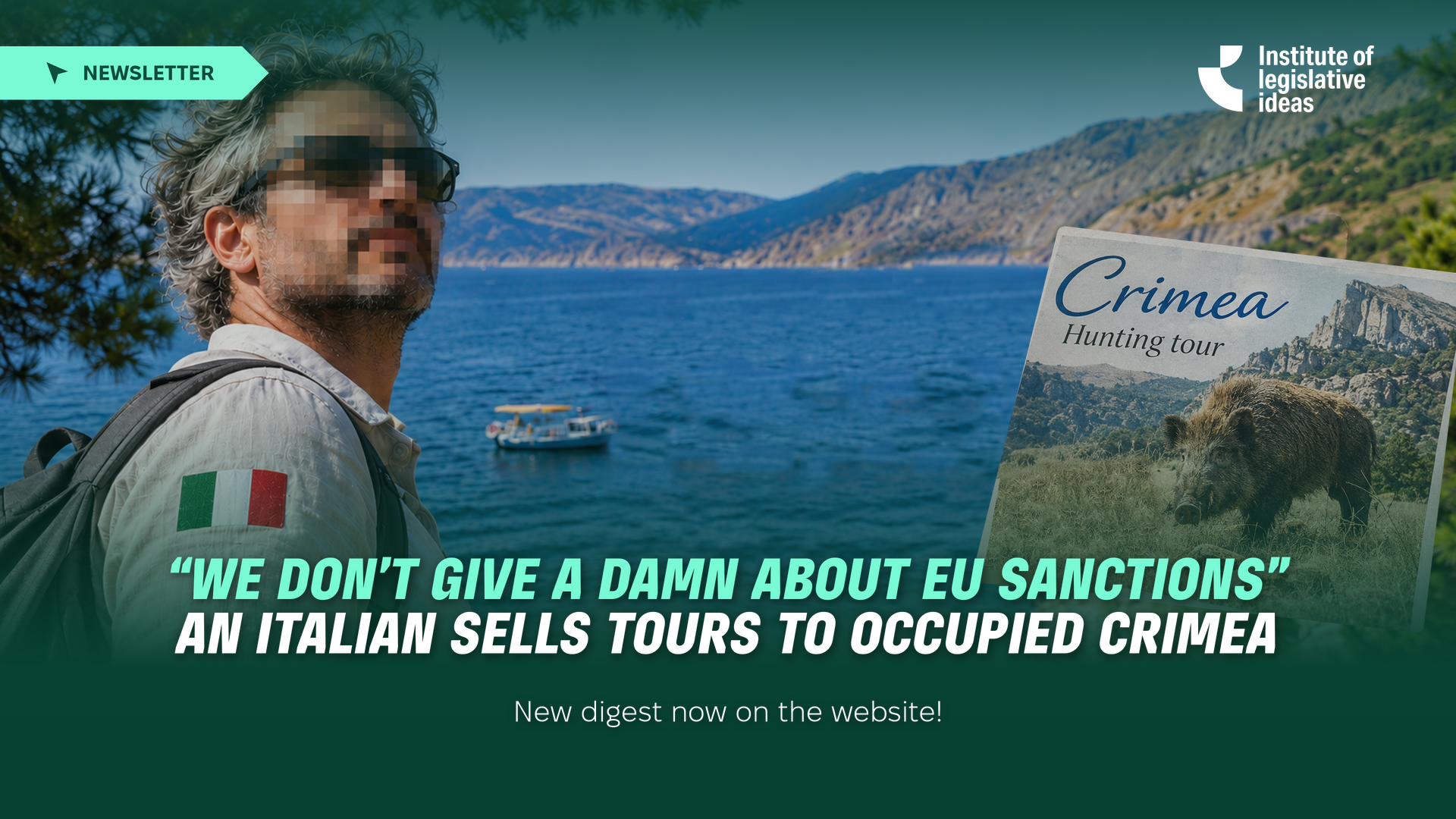
An Italian national is organising tourist trips to Crimea despite the sanctions. The activity raises concerns about compliance with restrictions related to the temporarily occupied peninsula.
3. Ukraine’s Sanctions Policy
Ukraine’s Defence Intelligence has published details of 10 institutes and 13 researchers working for Russia’s defence-industrial complex. Specifically, higher education institutions in Russia are highlighted for training personnel for the Russian defense industry, holding cooperation agreements with weapons manufacturers, training drone operators for Russian military units, and conducting R&D in military and dual-use technologies.
Ukraine has sold a mining asset confiscated from a Russian businessman Sergei Kabargin. The sale concerns property seized by the state as part of Ukraine’s sanctions policy.