


Newsletter of the main news 25.05/31.05
All newsDate
02 Jun 2026

- Telegram


1️⃣ Frozen Russian Assets
Despite a ruling by the Astana International Financial Centre (AIFC) Court allowing the enforcement of a $1.4 billion award against Gazprom in favor of Naftogaz, Kazakhstan’s Ministry of Justice stated that it will not proceed with enforcement at this stage. Officials emphasized that the decision has not yet entered into legal force and that Gazprom retains the right to appeal.
The Central Bank of Russia has filed a second lawsuit before the Court of Justice of the European Union challenging the freeze of its sovereign assets. Moscow is contesting EU measures that treat these assets as a potential source of financial support for Ukraine and a mechanism for repaying EU-backed loans once Russian reparations are secured.
A French court upheld the seizure of the Maïgrana villa on the French Riviera, a property linked to former Russian Industry Minister Viktor Khristenko and his wife, Deputy Prime Minister Tatyana Golikova. French authorities are investigating a suspected money-laundering scheme involving offshore structures, while an additional €17.2 million connected to the property’s sale remains frozen.
2️⃣ International Sanctions Policy
The United Kingdom continues to refrain from intervening against the Russian frigate Admiral Grigorovich, which has reportedly been escorting shadow fleet tankers near British waters for several months. According to The Telegraph, legal complications and concerns over a direct military confrontation may be influencing London’s approach.
At the same time, the UK imposed 18 new sanctions targeting networks that help Russia circumvent restrictions through cryptocurrency channels and shadow financial systems. The measures include sanctions against the Kremlin-linked A7 network operating through Kyrgyz financial infrastructure, as well as Georgian companies servicing the Russian market.
The European Commission sees no grounds for lifting sanctions on Belarusian potash fertilizers despite reports of U.S. interest in restoring transit routes. European Commission President Ursula von der Leyen stressed that the sanctions were recently renewed and that the underlying reasons for their introduction remain unchanged.
The European Union extended for another year its human rights sanctions regime targeting Russia. The measures affect 72 individuals and one entity accused of repression, human rights violations, and undermining democratic institutions. Their assets remain frozen, EU persons are prohibited from providing funds, and travel bans remain in place.
The United States denied visas to Russia’s Deputy Foreign Minister and Iran’s Foreign Minister ahead of a UN Security Council meeting in New York. Moscow criticized the move as a violation of U.S. obligations as host nation to the United Nations and described it as a sign of disrespect toward China’s presidency of the Council.
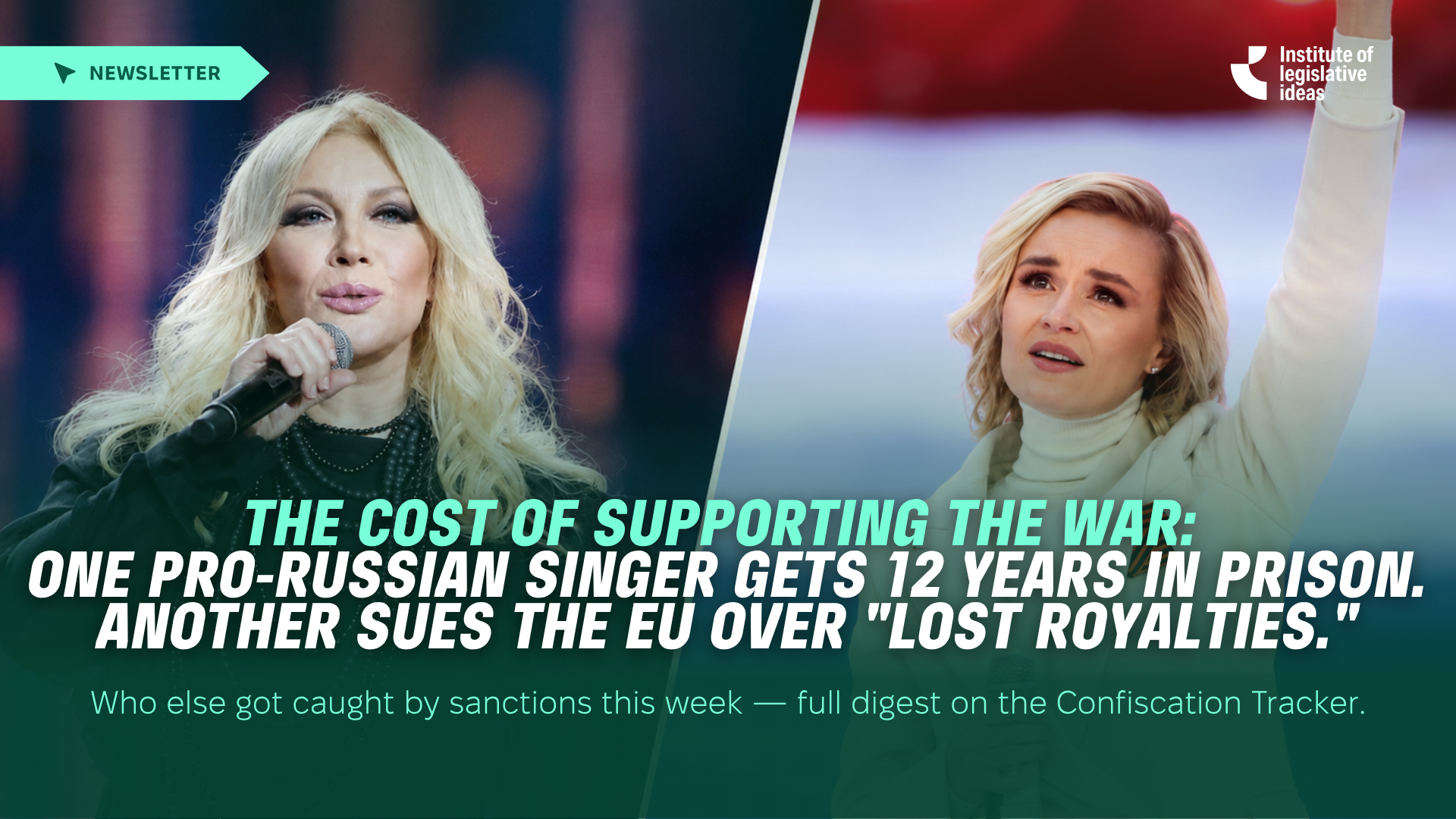
Russian singer Polina Gagarina has launched a second legal challenge against EU sanctions before the Court of Justice of the European Union. Sanctioned for participating in pro-war propaganda events, she argues that the restrictions have also affected her ability to distribute and monetize content on international digital platforms.
The International Ice Hockey Federation (IIHF) partially eased restrictions on Belarus by allowing its national teams to return to selected youth and women’s tournaments. The Ice Hockey Federation of Ukraine condemned the decision and announced plans to appeal, citing Belarus’s continued support for Russia’s war against Ukraine.
The U.S. Treasury removed 76 outdated entries from its sanctions lists, including 11 Russian nationals and the tankers Linda and Lady D. According to OFAC, the move reflects a technical database update involving deceased persons and decommissioned vessels rather than any broader policy shift.
3️⃣ Sanctions Violations and Evasion
Despite extensive sanctions, at least 30 companies reportedly supplied aircraft parts to Russia in 2025 through intermediaries in India, Türkiye, the UAE, and Kazakhstan. Bloomberg traced some components by serial numbers from Western suppliers through third-country intermediaries to Russian airlines, helping sustain Airbus and Boeing fleets operating in Russia.
Polish authorities uncovered a scheme involving a customs officer who allegedly facilitated the export of sanctioned goods to Belarus. According to investigators, shipments were falsely declared as food products while actually containing automotive parts, agricultural machinery components, and other restricted items.
In Germany, company executives are standing trial for allegedly exporting machine parts to Russia in violation of EU sanctions. Prosecutors claim the defendants arranged 65 shipments worth more than €830,000 through shell companies in Kyrgyzstan and Türkiye to conceal the true destination of the goods.
European intelligence agencies warn that Russia is intensifying efforts to acquire Western technologies despite tightening restrictions. Authorities report growing interest in advanced machine tools, industrial equipment, aerospace technologies, quantum research, maritime innovations, and other dual-use technologies with military applications.
4️⃣ Ukraine’s Sanctions Policy
Ukrainian law enforcement authorities exposed a group of business operators accused of supplying construction materials for the Russian Ministry of Defense. Investigators say the companies participated in Russian defense procurement tenders, supplied materials for military infrastructure projects, and paid more than RUB 100 million in taxes to the Russian budget.
An elite Kyiv apartment worth approximately $700,000, linked to sanctioned Russian businessman Tahir Garayev, has been seized and transferred to Ukraine’s Asset Recovery and Management Agency (ARMA). Investigators believe the property was re-registered to a proxy owner after sanctions were imposed in an attempt to shield it from confiscation.
Singer and former Ukrainian MP Taisiya Povaliy was sentenced in absentia to 12 years in prison with full asset confiscation for collaboration and support of Russia’s aggression against Ukraine. Earlier court rulings had already transferred her real estate, land plots, vehicles, weapons, and intellectual property rights to the Ukrainian state.
President Volodymyr Zelenskyy signed decrees synchronizing Ukraine’s sanctions regime with the EU’s 20th sanctions package against Russia. The measures target 120 individuals and entities, including Russian defense industry companies, manufacturers of drone and missile components, businesses in third countries, and other actors supporting Russia’s war effort