


###country-name###
Assets from anti-Russian sanctions violations – a source of compensation for Ukraine as a victim of aggression
Monitoring cases of violations of sanctions imposed in connection with Russia’s aggression against Ukraine, the status of confiscated assets and collected fines in these cases, and the progress of their transfer to Ukraine and victims
Map controls


Нічого не відбувається
Asset confiscated/fines collected – not transferred to Ukraine
Asset confiscated/fines collected – transferred to Ukraine
Context
Violations of sanctions imposed against Russia are a global problem that often has a transnational nature and undermines the security of states that have imposed sanctions on the aggressor. Nowadays, thousands of sanctions violation cases are being investigated worldwide; court decisions are handed down weekly, significant fines are collected, and assets worth millions of euros are confiscated. At the same time, only a few states have already established mechanisms for transferring these funds to support Ukraine and compensate for the damage caused by Russian aggression.
It is essential that sanctions policy serves not only a deterrent but also a compensatory function. Sanctions violators effectively facilitate the actions of the aggressor; therefore, confiscated assets and collected fines resulting from sanctions violations should be directed to the benefit of the victims of aggression – in line with the recognised principle of asset recovery for the benefit of victims. This approach is enshrined in EU law and should gradually become part of international practice.
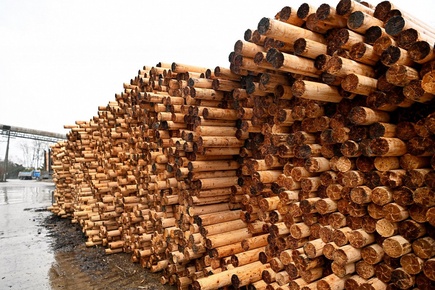
The court fined a man and his company €70,200 for importing timber from russia

Latvia
The Kurzeme District Court fined a man €31,200 for violating EU sanctions. His company must also pay a fine of €39,000
05 Mar 2026
Latvia

Officials of a company in the Kyiv region will be tried for supplying critical equipment to the russian federation

Ukraine
Law enforcement officers have completed their investigation and sent the case files concerning three employees of a company in the Kyiv region to court
04 Mar 2026
Ukraine
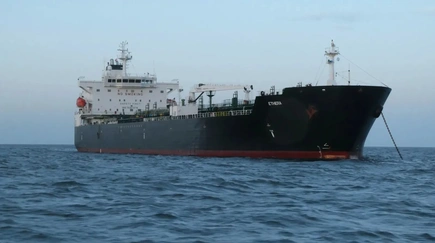
Belgium has set bail at €10 million for the seized russian tanker

Belgium
Belgium has set bail at €10 million for the russian ‘shadow fleet’ tanker Ethera
04 Mar 2026
Belgium



Frequently asked questions
General questions

1. What are sanctions violations and circumvention?
Sanctions violation is failure to comply with established sanctions restrictions. For example, conducting prohibited financial transactions or supplying sanctioned goods to Russia.
Sanctions circumvention refers to actions that do not directly violate sanctions but are intended to undermine their purpose. For example, providing false information about asset owners, failing to comply with reporting obligations by a sanctioned person, or breaching the conditions of an authorisation to perform acts otherwise prohibited by sanctions.
Both acts undermine the efficacy of sanctions regimes and effectively facilitate the aggressor. That is why most of Ukraine's partner countries provide for administrative or criminal liability for such actions, with the possibility of imposing fines and confiscating assets that were the subject of such violations.
2. How are sanctions violations and circumvention punished?
Each country establishes its own penalties for sanctions violations, which may include both administrative and criminal liability.
Criminal liability for sanctions violations is provided for in almost all of Ukraine's partner countries. For example, in the US, legal entities face fines of up to $1 million for sanctions violations, while individuals face imprisonment for up to 20 years. In the United Kingdom and Australia, sanctions violations carry penalties of up to 10 years of imprisonment and fines depending on the severity of the violation.
In addition to fines and imprisonment, the legislation of most countries provides for the confiscation of assets linked to sanctions violations. This rule is also enshrined in Directive (EU) 2024/1226, which sets minimum standards of criminal liability across member states for sanctions violations.
Administrative liability may involve significant fines, often reaching millions of US dollars.
Confiscated assets and collected fines should become a source of compensation for victims of aggression.
3. Why should assets resulting from sanctions violations be used to compensate for damages?
The purpose of sanctions is to stop Russian aggression. However, violations of sanctions, on the contrary, contribute to its continuation. That is why confiscated assets and collected fines from sanctions violators should be directed towards providing redress for the damage caused to the victim of aggression – Ukraine.
Currently, the burden of compensation falls on the victim state and its international partners, which contradicts the fundamental principle of justice that “the wrongdoer compensates for the damage caused”.
This approach is in line with the principle of asset recovery for the benefit of victims, recognized in international law and enshrined, in particular, in the UN Convention against Corruption and the FATF Recommendations. In the EU, this approach is set out in Directive 2024/1260, which encourages the transfer of confiscated assets related to sanctions violations and circumvention to the affected state.
4. Which countries have mechanisms for transferring such assets to Ukraine?
Currently, only the US and Lithuania have established mechanisms for transferring confiscated assets and collected fines in sanctions violation cases related to Russia's aggression against Ukraine to the benefit of Ukraine.
In December 2022, the US adopted a law allowing the transfer to Ukraine of proceeds from any covered confiscated property from sanctions violators. However, this mechanism only applies to assets confiscated before 1 May 2025. Moreover, a similar mechanism does not extend to fines collected by OFAC for sanctions violations, which constitute the largest share of financial penalties in such cases.
Lithuania has adopted amendments to its legislation, according to which not only confiscated assets but also collected fines for sanctions violations will be directed to support exclusively the reconstruction and restoration of Ukraine resulting from Russian aggression.
The EU has adopted Directive 2024/1260, which encourages the transfer of confiscated assets in connection with sanctions violations and circumvention, but implementation of this provision is due by 23 November 2026 and depends on each individual member state.
5. Which countries have already transferred such assets to Ukraine?
As of early March 2026, two countries have actually transferred confiscated assets and collected fines in sanctions violation cases related to Russia's aggression against Ukraine – the US and Lithuania.
The US transferred $5.4 million confiscated from sanctioned Russian oligarch Konstantin Malofeyev as part of one of the aid packages to Ukraine to support the reintegration and rehabilitation of veterans. In addition, approximately $500,000 confiscated as a result of the exposure of an illegal procurement network was transferred to Estonia for its active role in the proceedings. These funds are intended for the restoration of Ukraine’s energy infrastructure.
Lithuania directed €167,000 from fines imposed for sanctions violations to the rehabilitation of Ukrainian veterans.
In total, over $6 million linked to sanctions violation cases has been directed to support Ukraine. At the same time, the potential volume of assets that can be confiscated and collected in such cases is significantly larger, given the number of ongoing proceedings.
6. What is the potential amount of assets that can be confiscated and recovered in cases of sanctions violations?
The potential volume may reach hundreds of millions or even billions of US dollars. Nowadays, thousands of sanctions violation cases related to Russia's aggression against Ukraine are being investigated by Ukraine's international partners. In Germany alone, nearly 6,000 proceedings have been launched, in Latvia – 600, and in Poland – 275.
The amounts involved in these cases are significant. For example, in Germany, approximately €30 million in proceeds was confiscated for selling luxury cars to Russia with false declarations of destination, while the potential confiscation of assets of one Russian financial institution is estimated at €720 million. In the US, the fine imposed on GVA Capital Ltd. for sanctions violations amounts to nearly $216 million.
Overall, given the scale of the enforcement efforts, the potential for confiscations and collections in sanctions violation cases related to Russia's aggression against Ukraine may reach billions of US dollars.
7. Are EU member states obliged to transfer confiscated assets and collected fines to Ukraine?
No, EU member states are not currently obliged to transfer confiscated assets and collected fines in sanctions violation cases related to Russia's aggression against Ukraine. However, there is a legal framework that encourages such actions.
Article 19 of EU Directive 2024/1260 encourages the establishment of mechanisms for transferring confiscated assets linked to sanctions violations and circumvention. However, this is a recommendation, not an obligation, so each state independently decides whether to implement this provision into national legislation. The deadline for the implementation of the Directive is November 23, 2026.
Currently, only Lithuania has established such a mechanism and has experience in its application. Other member states have the opportunity to follow this example.
It is important that as many countries as possible take advantage of this opportunity, as the systematic implementation of such mechanisms will ensure the effectiveness of the principle of asset recovery for the benefit of the victim.
8. What needs can confiscated assets and collected fines from sanctions violators be directed towards?
Confiscated assets and collected fines can be directed towards a wide range of needs related to compensating for the damage caused by Russian aggression. These include, in particular, compensation for victims of aggression, rehabilitation and reintegration of veterans, and restoration of Ukraine's infrastructure.
This is confirmed by existing practice. The US directed funds towards supporting the reintegration and rehabilitation of veterans and the restoration of Ukraine's energy infrastructure, while Lithuania directed funds towards the rehabilitation of Ukrainian veterans. It is important to outline the possible directions for the use of such assets; however, they should address Ukraine's most pressing needs.
9. How is the data on this page collected?
We compile our database based on information from public sources: official press releases from government agencies, court decisions, and media reports. Since case information is constantly evolving and some proceedings may be confidential, we cannot guarantee that every case, decision, or amount is reflected here in its entirety. We are working on regular data updates.