


Newsletter of the main news 20.07/26.07
All newsDate
26 Jul 2026

- Telegram


1️⃣ Frozen Russian Assets
The EU has authorized Member States to confiscate and sell oil, grain, and other cargo seized from vessels belonging to Russia’s shadow fleet. Proceeds from these sales will not be transferred to Russian individuals or entities, and the new mechanism is intended to strengthen sanctions enforcement.
2️⃣ International Sanctions Policy
An EU agency has withdrawn its €2 million grant to the Venice Biennale following the decision to reinstate the Russian pavilion. The European Commission stated that projects funded by European taxpayers must uphold democratic values, while the Biennale’s organizers plan to challenge the decision.
Germany’s Advanced Nuclear Fuels will manufacture nuclear fuel assemblies for Western nuclear power plants in cooperation with Russia’s Rosatom. The German government has expressed serious concerns over the partnership and reiterated its support for extending EU sanctions to Russia’s nuclear sector.
Latvia’s Parliament has backed legislation allowing a ban on imports of selected goods from Russia and Belarus, including books, clothing, footwear, and toys. The restrictions are intended to complement existing EU sanctions and further reduce economic ties with the two countries.
Russia’s Curling Federation has lost its full membership status in World Curling and no longer holds voting rights within the international federation. The downgrade follows the suspension of Russian athletes from international competitions, which prevented the federation from meeting participation requirements.
International sanctions are placing increasing pressure on Russia’s civil aviation sector. Airlines are reportedly forced to service aircraft without proper certification, source spare parts through third countries, and cannibalize aircraft for components, undermining fleet reliability and slowing the development of Russia’s domestic aviation industry.
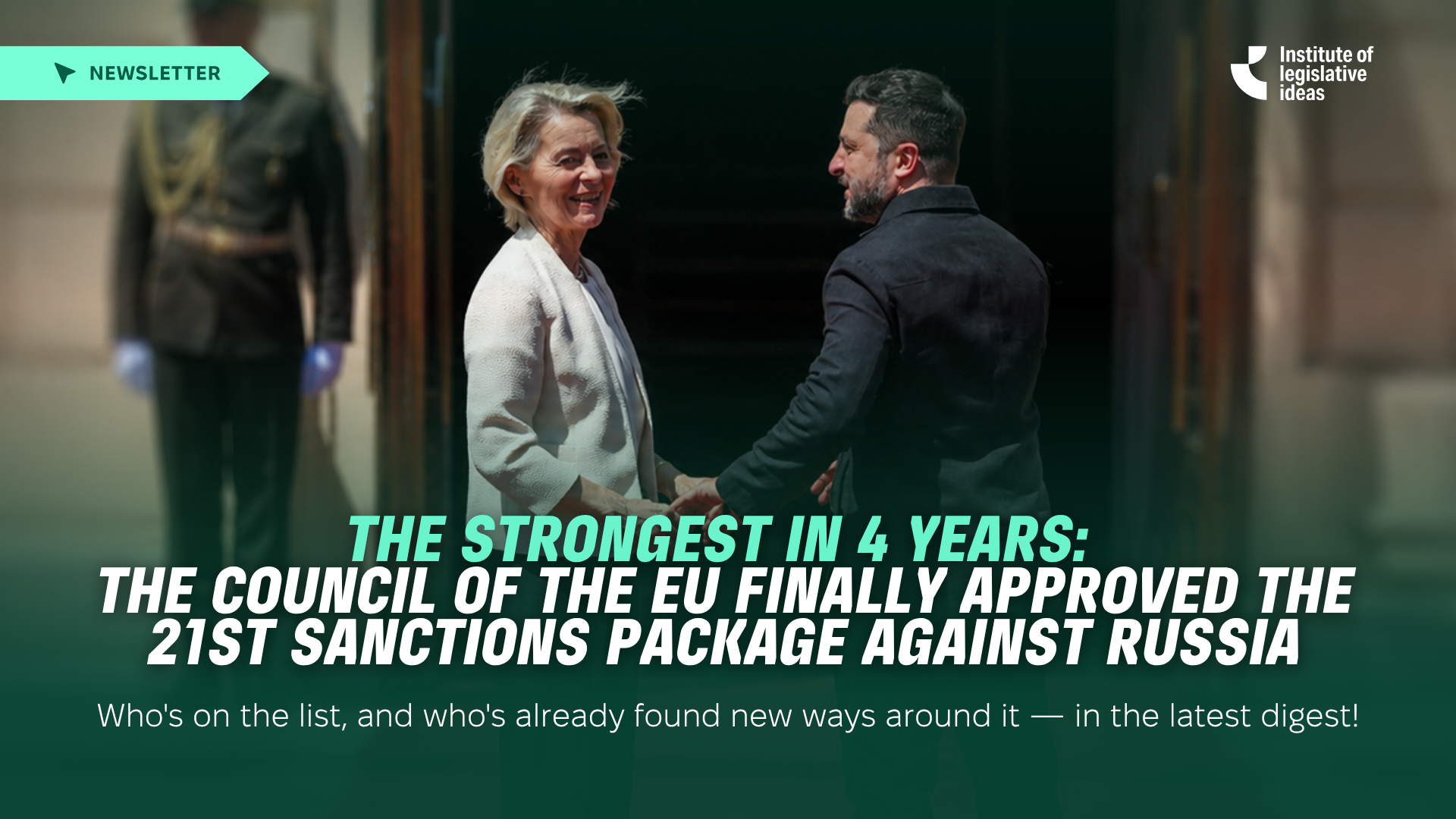
The Council of the European Union adopted the 21st package of sanctions against Russia, targeting banks, cryptocurrency platforms, defense industry entities, the oil sector, and an additional 41 shadow fleet vessels. The package also lays the groundwork for an EU-wide entry ban on individuals who have fought against Ukraine on Russia’s side.
The EU imposed sanctions on Russian Sports Minister Mikhail Degtyarev and FIDE President Arkady Dvorkovich. Following the decision, Dvorkovich temporarily stepped aside from his duties as head of the International Chess Federation.
The Pentagon added 31 Russian universities and research institutions to its list of high-risk foreign entities. U.S. organizations are advised to avoid cooperation with these institutions due to concerns over the misappropriation of research and sensitive technologies.
China imposed export restrictions on 14 European companies and institutions in retaliation for the inclusion of Chinese entities in the EU’s 21st sanctions package. The affected organizations are now barred from receiving Chinese dual-use goods.
Reckitt is selling its Russian hygiene products business to local manufacturer Arnest while retaining its consumer health division in Russia. The company expects to incur losses of approximately £175 million due to the costs associated with exiting the market.
Lithuania’s Ministry of Foreign Affairs has proposed new restrictions on Russian and Belarusian citizens. The measures include a mandatory public declaration condemning Russia’s aggression against Ukraine for participants in cultural, educational, and sporting events, as well as restrictions on purchasing property near strategic sites.
The Italian Football Federation abandoned plans to appoint Andrea Pirlo as head coach of the national team due to his commercial ties with Russian bookmaker Fonbet. The decision followed criticism from Italian politicians, who argued that such associations contribute to the normalization of Russia.
3️⃣ Sanctions Violations and Evasion
India has increased imports of Russian crude oil to more than 2.3 million barrels per day, despite U.S. sanctions on major Russian producers. Discounted prices and intermediary trading schemes continue to enable Russia to expand its seaborne oil exports and keep them near record levels.
Russia’s shadow fleet continues to rely on forged maritime documents and vessel registrations under the flags of African states to circumvent international sanctions. According to experts, the scheme enables Russia to export up to 4.1 million barrels of oil per day.
The EU’s Operation IRINI intercepted, for the first time, a tanker in the Mediterranean suspected of sailing under a false flag and being linked to Russia’s shadow fleet. The EU also authorized the inspection of another vessel as part of intensified efforts to combat sanctions evasion.
4️⃣ Ukraine’s Sanctions Policy
YouTube has restricted access in Ukraine to the channels of sanctioned pro-Russian performers who support the war and promote Kremlin narratives. Those affected include Nikolai Baskov, Lolita Milyavskaya, Stas Mikhailov, Olga Buzova, Ani Lorak, Anna Sedokova, and Alexander Rosenbaum. Several of these artists have been subject to Ukraine’s National Security and Defense Council (NSDC) sanctions since 2022.