


Newsletter of the main news 03.08/09.08
All newsDate
09 Aug 2026

- Telegram


1. Frozen Russian Assets
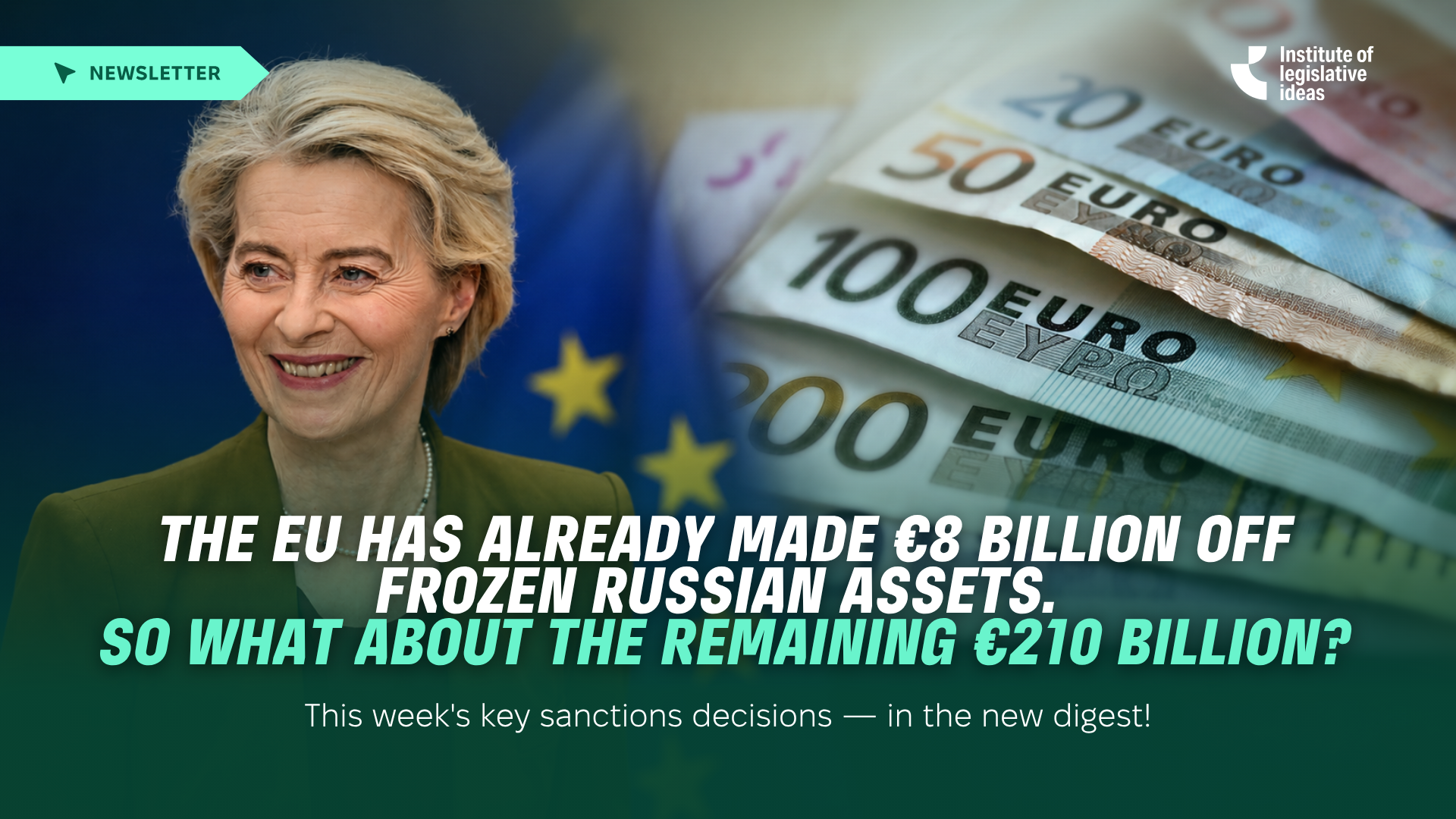
Former ministers from three countries have called on the EU to take immediate control of frozen Russian assets. They argue that these resources should be used to support Ukraine and ensure that Russia is held accountable for the damage caused by its aggression.
The EU plans to provide Ukraine with €1.4 billion in proceeds generated from frozen Russian assets. The funds are expected to support the Ukrainian state and strengthen the country's defence capabilities.
2. International Sanctions Policy
The European Union has agreed on new sanctions against Russia in response to its large-scale attacks on Ukraine. The measures are intended to increase economic and political pressure on Moscow and constrain its ability to sustain the war.
The U.S. Senate has backed Senator Lindsey Graham's bill to strengthen sanctions against Russia. The proposed legislation would significantly expand sanctions pressure and could also target countries that continue to maintain economic ties with Russia.
New Zealand has introduced another package of sanctions against Russia. The measures reinforce the country's coordination with international partners in holding Moscow accountable for its aggression against Ukraine.
The United Kingdom has also expanded its sanctions regime against Russia. The new measures target Russian entities and individuals supporting the Kremlin's war effort.
The EU has failed to reach agreement on a ban on the maritime transportation of Russian oil. The lack of consensus among Member States leaves one of the potentially strongest tools for restricting Russia's oil exports outside the sanctions regime.
Syria is reducing its use of Russian oil in the hope of securing sanctions relief from the United States. Damascus is seeking to reassess its energy ties with Moscow amid broader changes in its foreign and economic policy.
In July, Belgium became almost entirely dependent on imports of Russian LNG. The development highlights the continuing difficulty of reducing Europe's reliance on Russian energy supplies.
Russia has been cleared to participate in the next season of the Volleyball Nations League. The decision contrasts with the restrictions that remain in place for Russian athletes across a number of international sporting organisations.
Russian and Belarusian athletes will compete at the 2026 World Rhythmic Gymnastics Championships under neutral status. The decision reflects a gradual return of athletes from both countries to some international competitions, despite ongoing restrictions in other sports.
A French court has rejected an appeal by the former head of RT France against her deportation. The ruling reinforces France's position on restricting the activities of individuals linked to Russian state propaganda.
Lithuania is considering seeking compensation from Russia for damage caused to its embassy in Kyiv. The initiative reflects a broader effort to document and pursue compensation for losses resulting from Russia's aggression.
Sweden plans to transfer to Ukraine a vessel linked to Russia's “shadow fleet” that was detained by Swedish authorities. The move highlights a broader European willingness not only to freeze Russian-linked assets, but also to explore ways of putting them to use in support of Ukraine.
3. Sanctions Violations and Circumvention
Russia continues to expand its “shadow fleet” of gas tankers. The growing fleet allows Moscow to maintain energy exports while reducing the effectiveness of international restrictions.
Most critical components used by Russia to manufacture ballistic missiles originate in Western countries. This indicates that existing sanctions and export controls have not fully prevented Russia's defence industry from accessing foreign electronics and other sensitive technologies.
A Georgian oil refinery has refused to process Russian crude oil. The decision closes off one potential regional channel for the continued use and processing of Russian crude.
4. Ukraine's Sanctions Policy
Ukraine has imposed sanctions on 23 companies and 20 individuals linked to Russia's defence industry and security agencies. The measures target entities and individuals involved in sustaining Russia's military and security apparatus.