


Newsletter of the main news 19.10/25.10
All newsDate
25 Oct 2026

- Telegram


1. Frozen Russian Assets
The European Commission does not plan to reopen discussions on transferring frozen Russian funds to Ukraine. The issue remains contentious due to disagreements among EU member states over the legal and financial risks involved.
The United Kingdom is urging the EU to use €210 billion in frozen Russian assets to support Ukraine. The proposal has renewed debate over how Russian funds could be mobilized to meet Ukraine’s needs.
2. International Sanctions Policy
An Oslo court has authorized the seizure of five Russian-owned properties at the request of Naftogaz. The ruling is a step toward potentially selling the assets to compensate the Ukrainian company for losses associated with Russia’s occupation of Crimea.
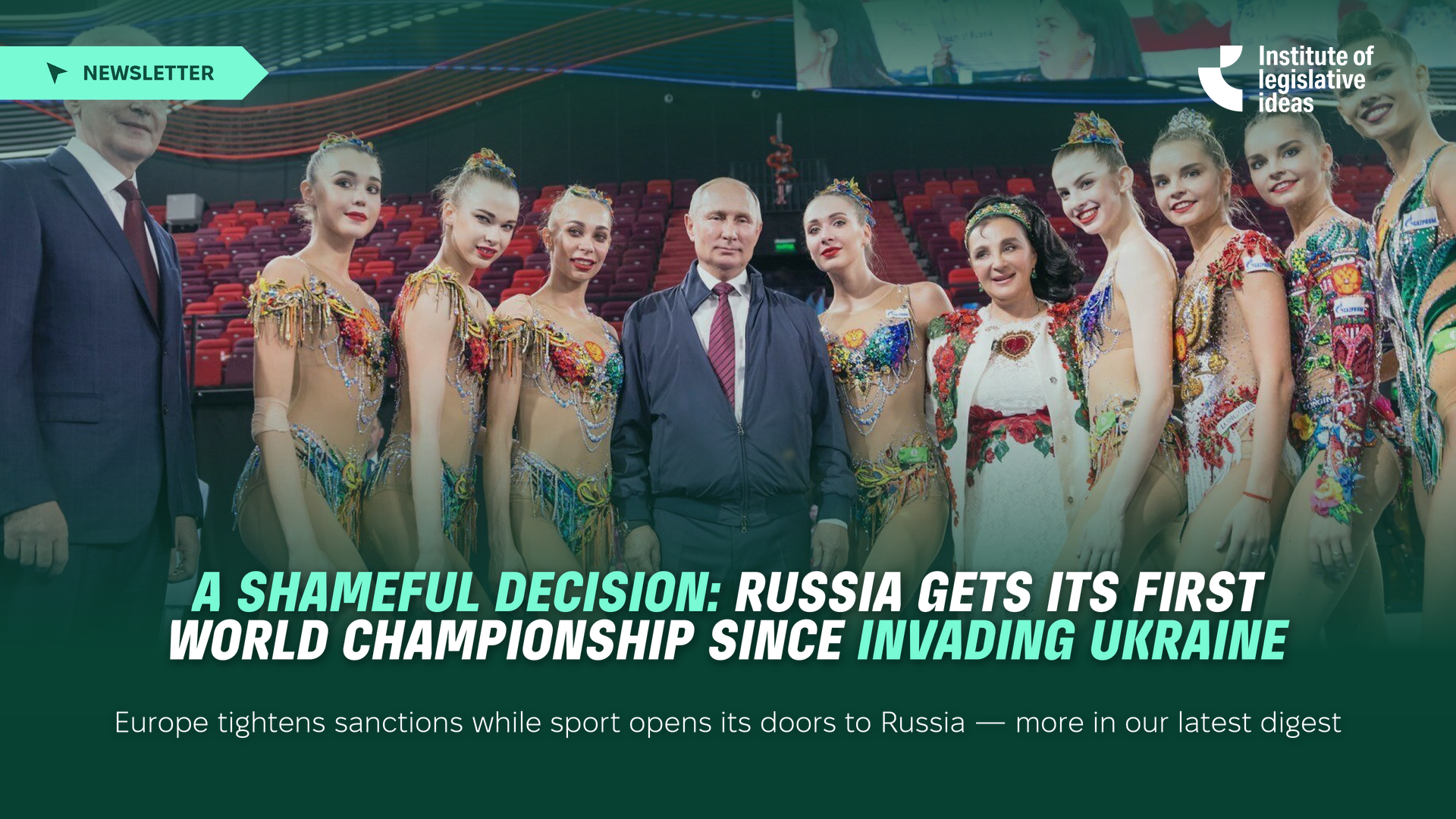
Russia has been selected to host the 2030 World Weightlifting Championships in Moscow. The decision comes amid a broader debate over the participation of Russian athletes and the return of Russian sporting events to the international calendar.
The European Parliament is calling for the ban on Russian sable fur imports to be reinstated. The proposal seeks to strengthen trade restrictions on Russia.
French energy giant TotalEnergies wants to continue trading in Russian liquefied natural gas (LNG). Its position highlights the continuing debate over Europe’s energy ties with Russia amid sanctions.
Germany has reduced its imports from Russia from €15 billion to €500 million. The decline reflects the significant contraction in trade following Russia’s full-scale invasion of Ukraine and the introduction of sanctions.
Norway has announced a new package of sanctions against Russia. The restrictions reportedly target areas including energy, finance, cryptocurrency services, the shadow fleet and Russia’s military-industrial complex.
An Amsterdam court has ordered ING Bank to continue providing services to Gazprom until the company opens an account with another European bank. The court noted that Gazprom is not currently subject to sanctions and that the bank had not demonstrated a money-laundering risk.
Russia’s sports minister has claimed that the International Olympic Committee (IOC) is demanding written guarantees from EU countries that Russian athletes will be allowed to compete. The statement comes amid ongoing disputes over Russian participation in international sporting events.
The International Union of Modern Pentathlon has stripped Lithuania of a World Cup event because of restrictions imposed on Russian athletes. The UIPM reportedly cited the need to ensure equal opportunities for Russian and Belarusian athletes in qualifying for the 2028 Olympics.
The Czech Republic does not support Finland’s proposal to impose visa restrictions on Russian citizens. The disagreement reflects differing views among European countries on further restricting Russian tourism.
3. Sanctions Violations and Circumvention
Russia secretly funded a gas project in Alaska associated with Polar Train LNG. According to media reports, Russia’s Novatek allegedly provided financing and influenced the project before the necessary US permits were obtained, raising concerns about potential sanctions violations.
Leroy Merlin’s Russian subsidiary supplied materials to Russian drone manufacturer Albatros. According to an investigation, the company’s Russian entity sold supplies to the manufacturer after the start of the full-scale invasion; Albatros was subsequently placed under sanctions.
A Russian diesel shipment was reportedly set to head to the United States following an agreement between Moscow and Washington. Russian officials said the arrangement was intended to increase fuel exports and stabilize prices, prompting debate over the potential economic benefits for Russia.
Russia has resumed diesel exports following an agreement with the United States. According to Reuters, tankers carrying Russian diesel have again headed to Turkey and Brazil, while supplies to Morocco have also resumed.
Norway has detained a vessel that was servicing Russia’s sanctioned Arctic LNG 2 project. The case highlights the logistics networks used to support Russian liquefied natural gas exports despite international restrictions.
The United States has outlined detailed plans to bring sanctioned tankers out of the “grey market.” The initiative concerns vessels involved in trade despite sanctions and aims to establish a framework for addressing their status and future operations.
Two Finnish nationals allegedly supplied Russia with rocket components for years. The case points to possible channels through which Russia’s military-industrial sector could obtain foreign-made parts despite export restrictions.
An entrepreneur from Ivano-Frankivsk supplied gas equipment to Russia in circumvention of sanctions, according to the case reported by Ukrainian authorities. The investigation concerns the alleged use of trade channels to deliver goods subject to restrictions.
The management of an Odesa-based company is suspected of helping Russia sell stolen Ukrainian grain worth approximately UAH 60 million. Investigators allege that company officials helped conceal the grain’s Ukrainian origin after it was taken from occupied territory and prepared documentation for its subsequent sale.
The captain of a vessel that transported stolen Ukrainian grain has had his actions classified as a war crime. The case highlights potential accountability not only for the seizure of property in occupied territory but also for knowingly facilitating its transportation or concealing its origin.
Russian forces have begun using a new Filin cruise missile against Ukraine. The reported deployment underscores the importance of monitoring the components and technologies that may be used in Russia’s weapons production.
4. Ukraine’s Sanctions Policy
President Volodymyr Zelenskyy has imposed new sanctions against Russia. The package reportedly targets 51 individuals and 44 legal entities linked to the production of ammunition and components for Russian long-range weapons.
Ukraine’s Ministry of Justice has filed a claim with the High Anti-Corruption Court seeking sanctions against the assets of Serhiy Zdrilyuk – a former deputy commander of the armed formations of the so-called "DPR" and commander of the first battalion of "BARS-Crimea". The ministry is asking the court to apply the asset-related sanctions mechanism provided for under Ukrainian law.
The High Anti-Corruption Court has confiscated 79 railway carriages belonging to Russian businessman Stanislav Gamzalov. According to Ukraine’s Ministry of Justice, companies associated with him provided logistical support for Russia’s aggression, including supplying goods to Russian military-industrial enterprises; the assets are to be transferred to state ownership.