


Newsletter of the main news 21.09/27.09
All newsDate
27 Sep 2026

- Telegram


1. International Sanctions Policy
Swiss voters rejected an initiative to strengthen the country’s neutrality in a referendum. According to preliminary results, around 69% voted against the proposal, which would have enshrined the principle of “perpetual and armed” neutrality in the Constitution and restricted Switzerland’s ability to impose sanctions without a UN mandate.
FIDE has refused to reinstate the Russian Chess Federation. Delegates rejected a proposal to restore its membership, with the decision linked to the federation’s failure to comply with the Court of Arbitration for Sport’s requirements concerning its activities in the occupied territories of Ukraine.
Australia has imposed sanctions on the Russian children’s camp Artek and 34 other Russian organisations. The restrictions target entities linked to Russia’s occupation policy and activities supporting the Russian war effort.
The EU has added Ksenia Fedorova, the former head of RT France, to its sanctions list. The restrictions are linked to her activities in Russian state-controlled media and information operations.
The EU Court has annulled the EU’s decisions to extend sanctions against former Russian senator Oleg Tkach for 2024 and 2025. The court found that while the grounds for his initial listing were sufficient, there was not enough evidence to justify the subsequent extensions.
The FIS has relaxed the criteria for Russian and Belarusian skiers seeking neutral status. Compulsory military service will no longer automatically prevent athletes from obtaining neutral status, while active cooperation with security services and public support for Russia’s aggression against Ukraine remain grounds for exclusion.
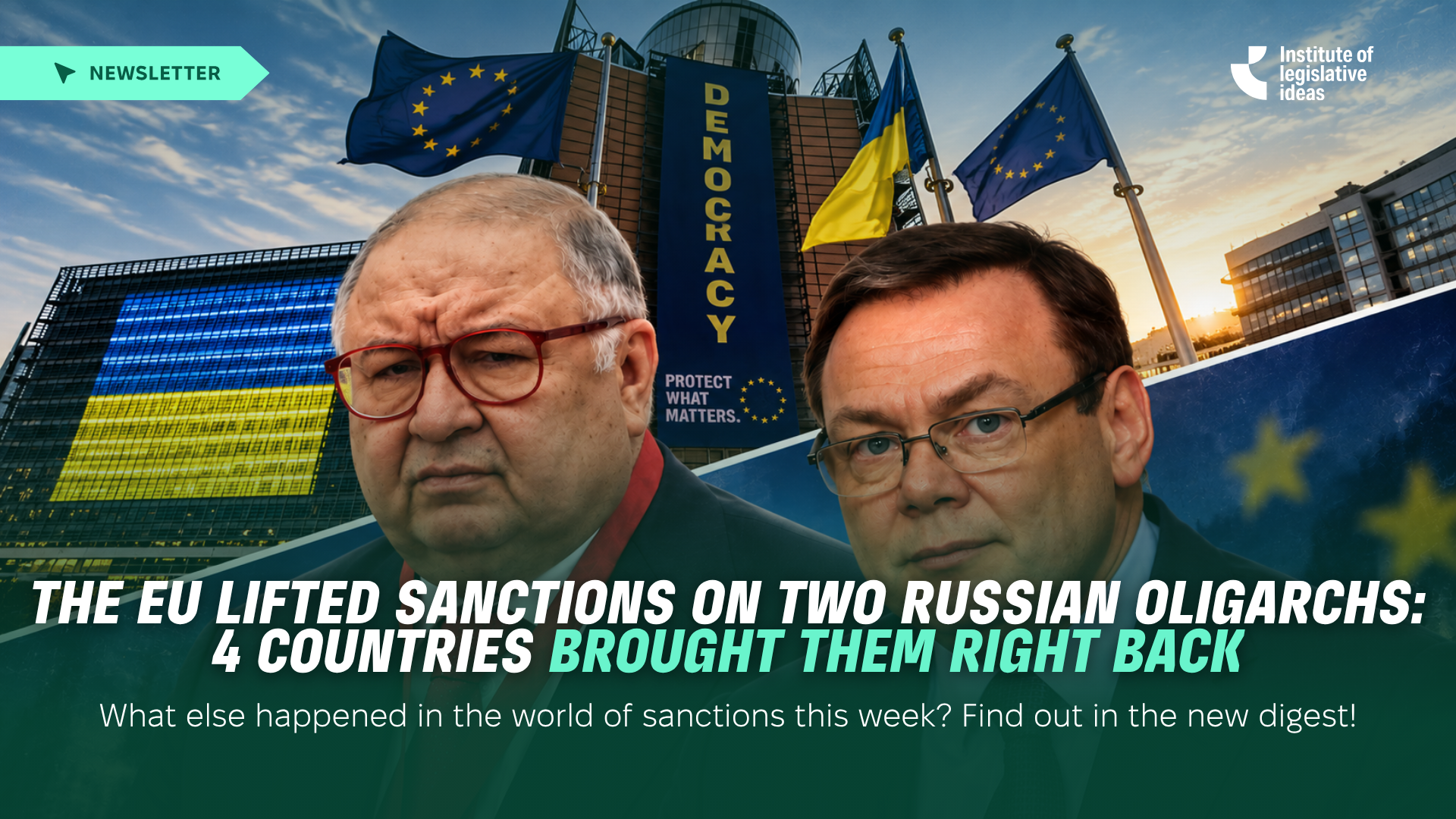
The European Union extended individual sanctions against more than 3,000 Russian individuals and entities for another three years, until 22 September 2029. At the same time, Alisher Usmanov, Mikhail Fridman, Andriy Falaleev, Redbird Corporate Services and three deceased individuals were removed from the list.
The UK will not lift sanctions against Alisher Usmanov and Mikhail Fridman, Bloomberg reported, citing sources. The position comes after the EU removed both businessmen from its sanctions list on 22 September.
Luxembourg continues to support efforts to lift EU sanctions against Mikhail Fridman. The Luxembourg government’s position is also linked to Fridman’s legal dispute concerning assets frozen in the country.
Estonia has imposed national sanctions on Alisher Usmanov and Mikhail Fridman after they were removed from the EU sanctions list. Tallinn had criticised the EU decision and said it would maintain restrictions at the national level.
Lithuania has launched the process of imposing national sanctions on Usmanov and Fridman after their removal from the EU sanctions list. Lithuania’s move follows similar steps announced by Estonia and Latvia.
Latvia has decided to introduce national sanctions against Usmanov and Fridman after their removal from the EU sanctions list. The government instructed the relevant authorities to prepare the necessary legal measures.
Russian athletes will be allowed to compete at the 2026 World Artistic Gymnastics Championships under neutral status. Participation is subject to requirements concerning support for the war against Ukraine and links to Russian security structures.
Donald Trump said that he would be prepared to impose additional sanctions on Russia if necessary. He was referring to new powers provided under recently adopted US legislation, including the possibility of imposing high tariffs on countries purchasing Russian energy or facilitating sanctions circumvention.
The United States is working on a potential deal to purchase potash fertilisers from Belarus, according to Donald Trump. The initiative comes amid a gradual easing of some US sanctions on Belarusian entities following the release of political prisoners.
2. Sanctions Violations and Circumvention
Russia has registered 107 vessels previously associated with its “shadow fleet” under the Russian flag. According to CREA, Russia’s ship registry grew from 280 to 382 vessels between January 2025 and June 2026, with most of the newly registered vessels already subject to sanctions.
Russia channelled more than $6.9 billion through the international banking system using the A7 payment network, according to a Financial Times investigation. The system used front companies and financial institutions in several countries to facilitate cross-border payments, including transactions involving dual-use and other sensitive goods.
3. Ukraine’s Sanctions Policy
Volodymyr Zelenskyy has imposed sanctions on 44 individuals involved in Russia’s organisation of illegal “elections” in the temporarily occupied Ukrainian territories. The list includes Russian propagandist Irina Kuksenkova and former Ukrainian MP Yuriy Onyshchuk, who began cooperating with Russian forces after the occupation of Melitopol.
Ukraine has called on EU member states to impose national sanctions on Usmanov and Fridman after their removal from the EU sanctions list. Foreign Minister Andrii Sybiha said Ukraine expects its partners to maintain sanctions pressure on Russian business figures.